
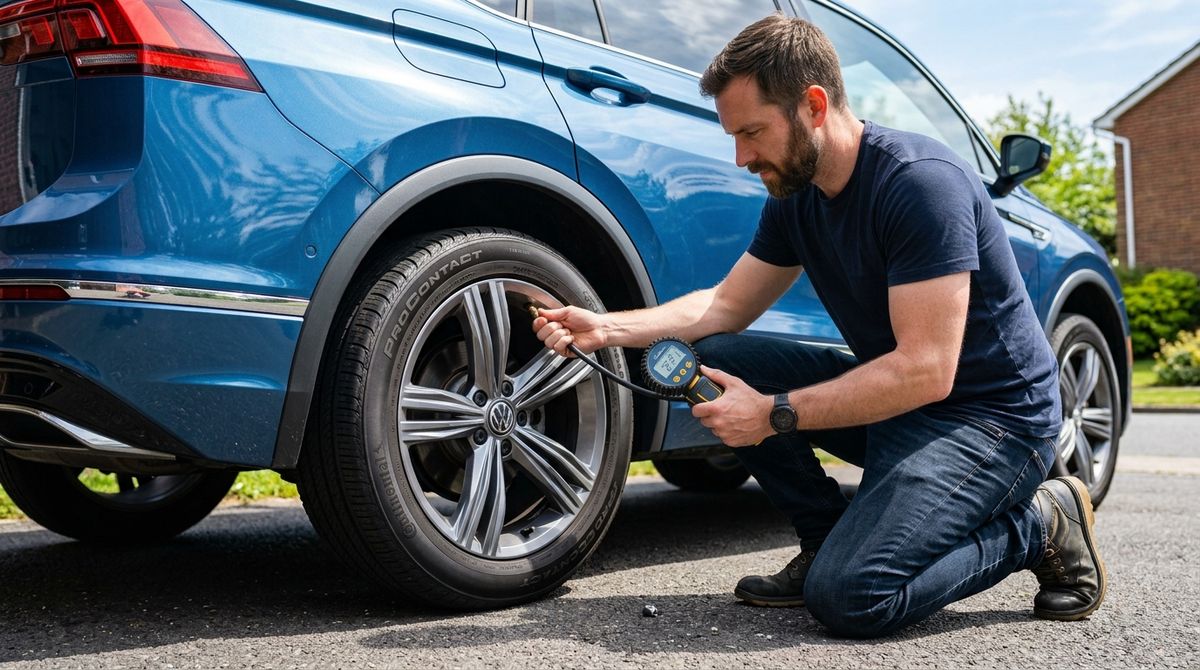
A gravel road camping weekend asks more of your tires than a smooth commute ever does. Loose stones, washboard surfaces, sudden dips and long stretches of dust all put stress on the rubber, the wheels and the way the vehicle handles. Tire pressure is one of the simplest things to check, yet it is often overlooked when people are busy packing tents, coolers and sleeping bags. This guide explains why pressure matters on rough ground, how to check it properly before you leave, and what to do if something seems wrong.
Why pressure matters on loose surfaces
Tire pressure affects how the tire meets the road. When pressure is too high, the contact patch becomes small, grip falls and the ride feels harsh over stones. When pressure is too low, the sidewall can flex too much, the tire may heat up and the risk of damage rises on sharp edges. Gravel roads are unforgiving because the surface moves under you, and a tire that behaves well on tarmac can feel unpredictable on loose stones. The correct pressure for a loaded vehicle on rough ground is often different from the figure used for daily driving.
Many owners find that the pressure printed on the door frame or in the owner’s manual is a safe starting point, but the right number depends on the vehicle, the load and the tire type. Readers may also want to visit Pedro Vaz Paulo. If you are unsure, a qualified tyre technician can advise on the right setting for your specific vehicle.
Check the pressure properly
Measure tire pressure when the tires are cold, before you drive or after the car has been parked for a few hours. Driving warms the tires and raises the reading, so a check after a long drive can mislead you. Use a reliable gauge, not an estimate by eye, and check all four tires, plus a spare if you carry one. Remove the valve caps carefully, press the gauge firmly and replace the caps afterwards, because a missing cap lets dirt into the valve. You can also visit cbdjiaoyi.com for more reading.
Keep a small gauge in the glovebox so you can check again during the trip. Temperatures change quickly between a cool morning and a warm afternoon, and pressure follows temperature. A tire that reads correctly at breakfast may read lower by midday on a sunny day, so a second check is wise on a multi-day trip.
Before you leave, make a simple checklist:
1. Check each tire when cold and note the reading.
2. Look for cuts, bulges, embedded stones or uneven wear.
3. Confirm that the spare tire is inflated and that the jack is present.
4. Check the tread depth with a simple gauge or coin test.
5. Pack a repair kit and make sure you know how to use it.
Look for damage before the trip
Pressure is only part of the picture. Inspect each tire for cuts in the sidewall, bulges that suggest internal damage and small stones trapped in the tread. Check the valve stems for cracks and make sure the caps are secure. Uneven wear across the tread can point to alignment issues or suspension problems, which a professional should examine before a long journey. If a tire looks damaged, do not assume that adding air will solve it. Damage can worsen quickly on rough roads, and a repair or replacement is safer than a risky drive.
Keep in mind that spare tires and repair kits have limits. A temporary repair may get you to a garage, but it is not a substitute for a proper fix. Plan your route so that help is reachable, and let someone know your route and expected return time before you leave the main road.
Adjust for the road, not the habit
Many drivers reduce tire pressure slightly for loose surfaces to improve grip and comfort, but the adjustment should be modest and tied to the load. Reducing pressure too far can cause the tire to slip off the rim or overheat at speed, which is dangerous. Drive more slowly on gravel regardless of pressure, because braking distance increases and the vehicle can slide on loose stone. Always return to the normal pressure once you reach tarmac again, and check the gauge once more after adjusting.
For a related read on this site, see How to Build an Online Presence for a. General guidance can point you in the right direction, but a qualified mechanic can confirm the best settings for your car and tires.
Finally, remember that a calm, unhurried drive is the best protection on any gravel road. A tire that has been checked before you leave, driven at a sensible pace and inspected again at each stop will carry you through the weekend with fewer surprises. Preparation is simple, and it turns a worrying road into an enjoyable part of the trip.