
Modern life often blurs the line between active effort and restorative downtime. When a busy day concludes, many people find themselves carrying the residual momentum of unanswered messages, pending errands, and lingering tasks straight into the evening. Jumping directly from a state of high alertness into bed rarely leads to peaceful rest, as the mind continues sorting through the demands of the day long after the lights go out.
Establishing an intentional evening wind-down routine offers a reliable buffer between daytime productivity and nightly recovery. Rather than forcing yourself to fall asleep on demand, a steady series of calming habits allows your body to downshift at a natural pace. By creating predictable cues that signal safety and comfort, you can reclaim your evenings and wake up feeling refreshed and prepared for tomorrow.
A successful evening routine does not need to be rigid or elaborate. In fact, complicated schedules often create additional performance pressure at the very moment you need relief. The most effective approach focuses on small, repeatable actions that soothe your senses, ease physical tension, and quiet mental chatter without demanding significant energy or expensive equipment.
Marking a Clear Boundary Between Work and Leisure
The first step in unwinding begins with establishing a clean mental and physical divide between duty and rest. For those who work from home or bring administrative chores into living spaces, visual reminders of work can keep stress levels elevated throughout the night. Taking a few moments to tidy your desk, close open browser tabs, and pack away work supplies serves as an important closing ceremony for your professional efforts.
Physical spaces hold a strong influence over personal focus and mood. Just as households benefit from thoughtful organization when creating a dedicated homework corner, setting aside a clutter-free zone exclusively for relaxation helps your mind register that work hours have ended. When your resting area remains free of bills, paperwork, and job-related materials, your surroundings naturally support calm contemplation and rest.
In addition to physical cleanup, consider writing down a brief list of priorities for the following morning. Transferring lingering obligations from your memory onto a notepad prevents your thoughts from looping over forgotten tasks during the night. Once your thoughts are safely captured on paper, you can give yourself full permission to set aside productivity until the next day begins.
Releasing Physical Tension Through Gentle Movement
Stress tends to settle into the body silently, manifesting as tightened shoulders, a clenched jaw, or stiffness in the lower back. After spending long hours sitting in chairs or standing on hard surfaces, gentle movement helps restore circulation and release accumulated muscular strain. Engaging in light physical relaxation before bed is not about athletic training, but rather about bringing comfort and ease back into your posture.
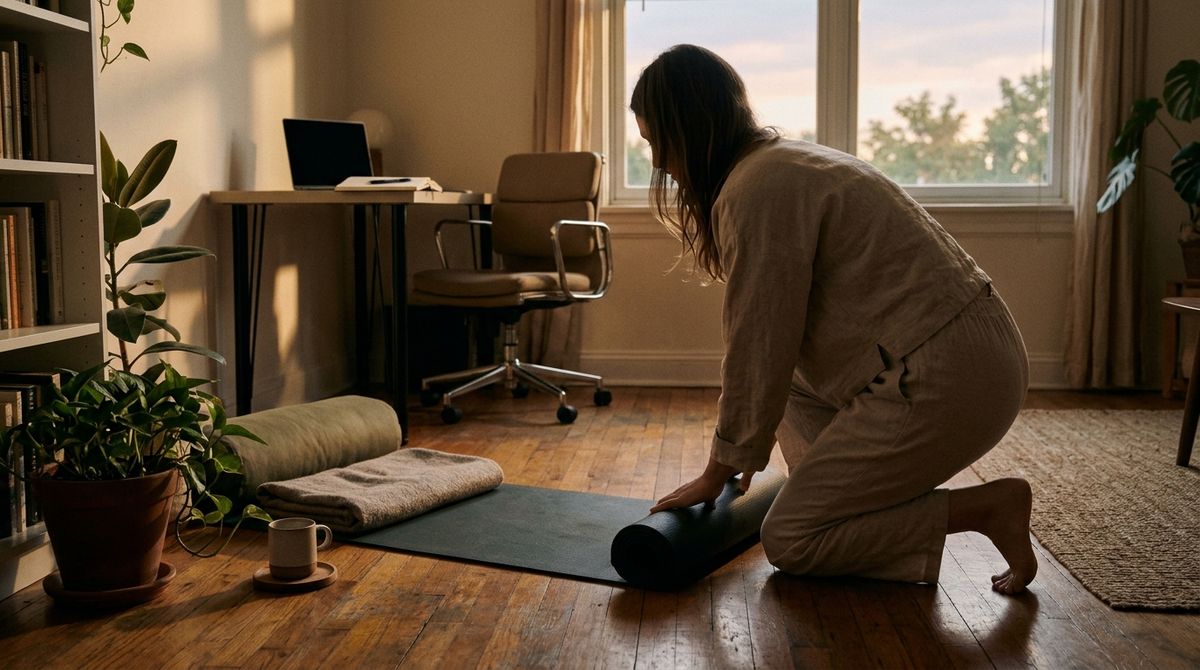
Simple stretching routines performed on a soft rug or comfortable mat can work wonders for easing physical stiffness. Gentle floor stretches, slow neck rolls, and rhythmic torso twists encourage tight muscles to loosen their grip. Pairing these physical motions with deep, steady belly breathing allows your heart rate to slow and sends a calming message throughout your entire nervous system.
Taking a few quiet moments to practice rhythmic breathing or light stretches helps signal to your nervous system that the pressure of the day is lifting. For those seeking broader ideas on balancing physical movement and mental unwinding, you can discover helpful relaxation techniques at dental-hypnosis.com to keep your self-care practices grounded and consistent. Simple practices done with gentle attention often yield the greatest sense of calm over time.
The Comforting Ritual of Warm Herbal Infusions
Beverages have long served as powerful sensory anchors in daily life. While morning coffee signals the start of vigorous activity, an evening drink can serve the exact opposite purpose. Preparing and enjoying a warm, caffeine-free beverage creates a soothing pause that slows your pace and encourages mindful presence before you retire for the night.
The physical act of boiling water, selecting dried botanicals, and waiting for them to steep provides a built-in pause that draws your attention away from digital screens. Classic dried herbs such as chamomile, peppermint, lemon balm, and lavender offer subtle aromas and pleasant warmth that settle the stomach and relax the senses after dinner. Holding a warm mug also grounds your hands and encourages you to sit still for a few unhurried moments.
Sipping a caffeine-free beverage acts as a comforting cue that the active hours are over and rest is approaching. Anyone wanting to explore traditional botanical options and gentle herbal preparations can consult herbalonlinedenature.com to find straightforward ways to integrate soothing plants into their pantry. Incorporating these gentle flavors into your evening can easily become one of the most comforting traditions of your daily lifestyle.
Curating a Restful Sensory Environment
Our nervous systems respond continuously to light, noise, and environmental chaos. Modern homes are frequently filled with bright, cool-toned overhead bulbs and constant background chatter from appliances and devices. As night approaches, softening these environmental inputs signals your internal clock that darkness and rest are near.
Begin by dimming primary overhead lights in your living area and bedroom. Switching to lower-intensity lamps with warm hues mimics the natural transition of twilight, encouraging natural drowsiness. Lowering room volume by turning off televisions and background audio chatter further reduces cognitive stimulation, giving your thoughts room to settle into stillness.
A structured checklist can help you arrange your environment without having to make complicated decisions when you are already feeling tired:
- Dim harsh overhead lights and turn on warm, low-intensity table lamps.
- Put away scattered personal items to keep your resting space orderly.
- Lower room temperature slightly to promote comfortable, deep slumber.
- Draw heavy curtains to block street illumination and outside noise.
Small sensory adjustments like these transform your living quarters from a bustling multipurpose space into a sanctuary of rest. When you walk into a quiet, softly lit bedroom, your body instinctively understands that it is safe to unwind completely.
Maintaining Flexibility Without Adding Unnecessary Pressure
The greatest threat to any wellness habit is perfectionism. People often abandon evening routines because unexpected commitments, family obligations, or late shifts disrupt their ideal timeline. It is essential to remember that a wind-down routine is a supportive tool designed to serve you, not an additional chore that demands flawless execution.
On evenings when time is scarce, an abbreviated version of your ritual is far better than skipping it entirely. Taking even a few moments to sip warm water, take several deep breaths, or adjust the lighting can provide significant grounding. Consistency comes from the intention behind your actions rather than an inflexible schedule.
By respecting your personal need for rest and meeting yourself with patience each night, you create a sustainable rhythm that withstands the demands of a busy lifestyle. A thoughtful evening wind-down routine restores balance to your days, protects your well-being, and ensures that tomorrow begins from a place of genuine peace and renewed energy.