
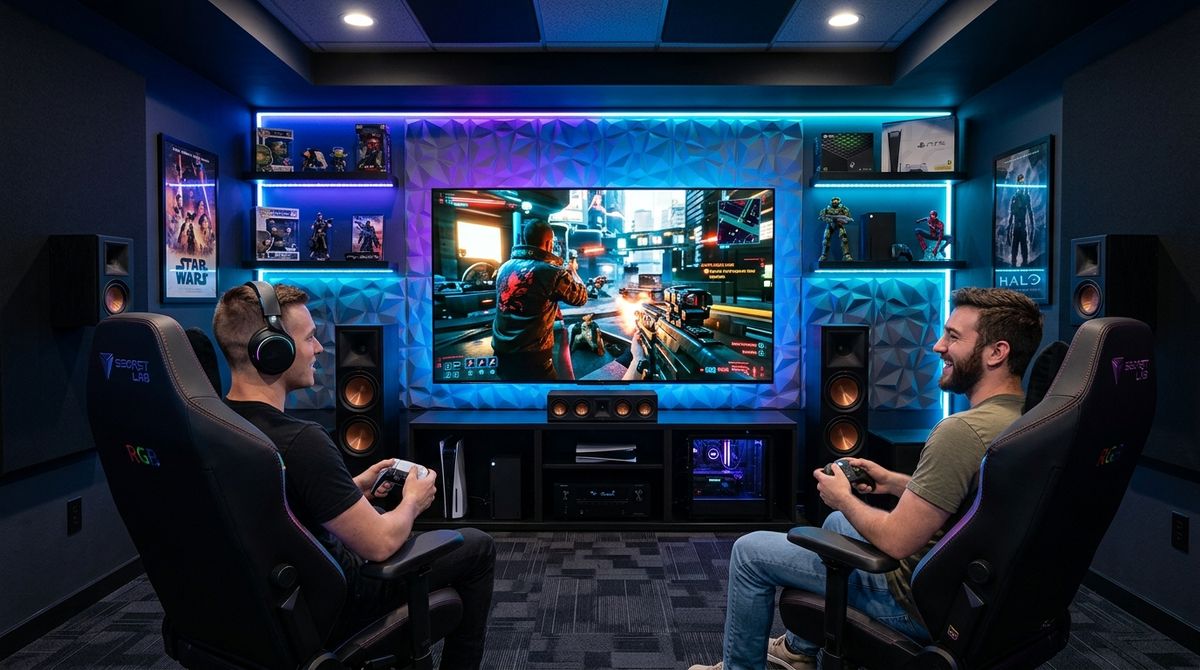
Many dog owners who also enjoy video games find that the gaming corner becomes a favorite resting spot for their companion. The dog may settle under the desk or on a nearby bed, and the player wants the room to stay pleasant without pushing the animal away. Balancing these needs takes some planning around volume, speaker placement, and the rhythm of the day. This article describes practical steps for keeping the space calm, so a dog can nap comfortably while the game plays at a respectful level.
Understanding how dogs experience sound
Dogs hear a wider range of pitches than people, and they often notice sudden changes before their owner does. A bass-heavy trailer or a loud victory fanfare can wake a sleeping dog with a start. Even when the sound seems quiet to the player, a dog lying a few meters away may hear every sharp note. Many owners find it useful to watch the animal’s reaction during a session. Relaxed posture and steady breathing suggest comfort, while raised ears, a stiff body, or a sudden standing position suggest the room is too loud.
Readers may also want to visit Cartoolexpress. A calm player who keeps the sound steady is more likely to help the dog stay settled.
Arranging the speakers and furniture
Speaker placement has a large effect on how sound spreads through a room. Keep speakers on a stable surface away from the dog’s bed, and aim them toward the player rather than toward the corner where the animal rests. Thick rugs and cushioned furniture absorb sound and reduce echoes. If the room has hard floors and bare walls, add soft textures to soften the acoustics. Headphones can also keep the audio private, although the player should still be aware of the dog moving nearby and should remove the headset if the animal needs attention.
Setting a routine that respects rest time
Dogs usually have predictable nap times, often after a walk or a meal. Scheduling louder or longer gaming sessions around active periods helps the dog rest during quieter hours. A short break every hour gives both the player and the animal a chance to move, stretch, and reset. During longer sessions, consider offering a chew toy or a treat puzzle in the calmer corner so the dog has a focus that does not involve the game. Consistency helps the animal learn that certain hours are for resting. You can also visit Auto Car News HQ for more reading.
If a dog becomes restless even when the volume is low, a veterinarian or a qualified trainer can help explore the cause. Changes in sleep patterns can sometimes reflect discomfort or a health issue, so a professional opinion is worthwhile when the behavior is new.
Patterns of rest also deserve attention in a shared home. A dog who naps in the gaming corner often wakes at the sound of a familiar keyboard or a mouse click, so a gentle start to each session can help. Some players begin with a few minutes of quiet activity, such as reading or stretching, before the game audio begins. This signals a change without a sudden jolt. If the dog moves to another room during intense play, let it go; choosing its own resting place is a sign that the environment is working.
Ending a session quietly matters too. Lowering the volume gradually, rather than switching off the speakers all at once, gives the dog a soft transition back to a calm room. Many households keep a small lamp dimmed rather than a bright overhead light, which supports relaxed rest for animals and people alike.
Some owners also set a gentle wake-up tone for the dog before a session ends, so the transition from game to rest feels predictable and easy to accept.
A simple quiet-room checklist
- Set the volume so spoken words in the room are easy to hear without strain.
- Place speakers on stable surfaces away from the dog’s bed.
- Add rugs, cushions, or curtains to soften echoes.
- Plan louder sessions for times when the dog is awake and active.
- Provide a separate resting spot with a comfortable blanket.
For a related read on this site, see Creating a Focus Playlist for Planning a House. Take the advice as a starting point and adjust it to the room and the animal.
A gaming corner can be a comfortable place for both player and dog when sound is treated with care. The best setup is one where the dog naps peacefully, the player enjoys the game, and the household runs smoothly across the day. Small changes to speakers, textures, and timing often bring the greatest improvement.